

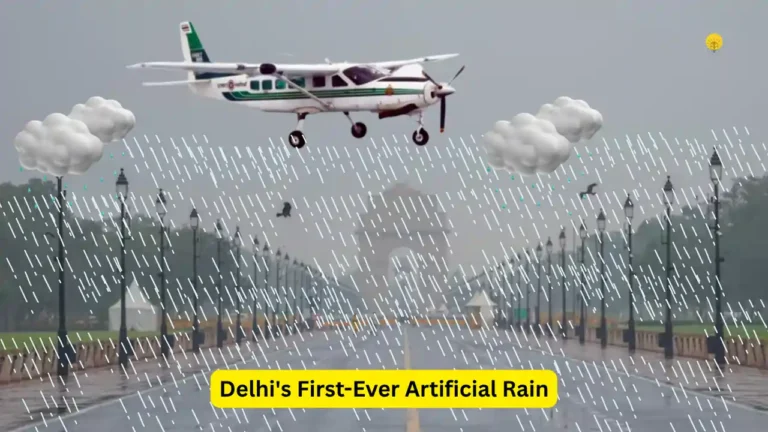
Artificial rain, scientifically known as Cloud Seeding, is becoming one of the most discussed environmental technologies in 2026. From reducing pollution in Delhi to solving water scarcity in the United Arab Emirates, cloud seeding is making headlines across the globe.
But is it really effective, or just a temporary solution? Let’s explore the latest updates, benefits, and challenges.
Latest News: Artificial Rain in India
India has recently started testing artificial rain technology to control rising air pollution levels, especially in Delhi.
Cloud seeding works by dispersing substances like silver iodide into clouds to encourage rainfall. This rain helps wash away pollutants and improve air quality temporarily.
According to Reuters, Delhi’s cloud seeding trials aim to reduce hazardous smog levels during peak pollution seasons.
Key Highlights:
- Focus on reducing winter air pollution
- Temporary drop in AQI levels
- Highly dependent on weather conditions
External Resource:
- Latest coverage by Reuters
Drone-Based Cloud Seeding in India
A major innovation has been introduced by Indian Institute of Technology Roorkee, where scientists are developing drone-based cloud seeding systems.
Benefits of Drone Technology:
- Lower cost than aircraft seeding
- Better targeting of clouds
- Suitable for wider use
As reported byThe Times of India, this innovation could make artificial rain more efficient and scalable.
Global Example: UAE’s Success with Artificial Rain
The United Arab Emirates is leading in cloud seeding innovation due to its water scarcity challenges.
What UAE is Doing:
- Investing in advanced research
- Using AI to track cloud patterns
- Developing eco-friendly seeding materials
According to The National News, UAE has successfully increased rainfall in certain areas.
AI in Cloud Seeding Technology
Artificial Intelligence is improving the effectiveness of cloud seeding by helping scientists:
- Predict cloud movement
- Identify ideal seeding conditions
- Increase rainfall success rates
Reports from The Week highlight how AI is transforming weather modification globally.
Benefits of Artificial Rain
- Helps reduce air pollution temporarily
- Increases rainfall in drought areas
- Supports agriculture
- Improves water availability
Risks and Limitations
Despite its advantages, cloud seeding has several challenges:
- Requires existing clouds
- Results are inconsistent
- Effects are short-term
- Environmental concerns still under research
The Guardian reports that cloud seeding cannot replace long-term environmental solutions.
Is Artificial Rain a Permanent Solution?
The answer is No.
Cloud seeding is a helpful technology, but it cannot solve pollution or water crises permanently. Governments must focus on:
- Reducing emissions
- Sustainable development
- Environmental protection policies
Future of Cloud Seeding
With advancements like drones and AI, artificial rain technology is expected to grow rapidly in the coming years.
Future possibilities include:
- More accurate rainfall prediction
- Lower cost implementation
- Wider global adoption
However, it will likely remain a supporting technology rather than a complete solution.
FAQs on Artificial Rain
1. What is cloud seeding?
Cloud seeding is a technique used to create artificial rain by adding particles into clouds to encourage rainfall.
2. Is artificial rain safe?
It is generally considered safe, but long-term environmental effects are still being studied.
3. Can cloud seeding reduce pollution?
Yes, but only temporarily by washing pollutants from the air.
4. Which country uses cloud seeding the most?
Countries like the United Arab Emirates, China, and the United States use this technology.
Conclusion
Artificial rain is emerging as an innovative solution for modern environmental challenges. While countries like India and the UAE are making progress, the technology still has limitations.
Cloud seeding may help in the short term, but real change will come from sustainable environmental practices.
About The Author